
How much money should homeowners keep in an emergency fund?
(Finlit Series)
Plus 4 Tips to Build Your Emergency Fund Faster
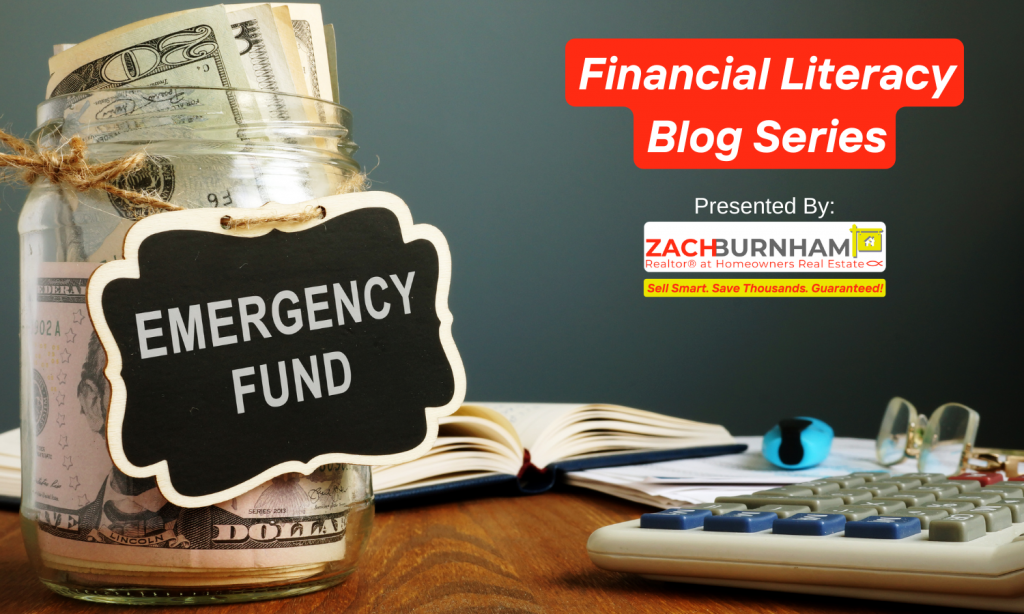
Unexpected expenses are a part of life — but when you’re a homeowner, those surprises tend to be bigger, more expensive, and far more disruptive. That’s why, whether you’re a current homeowner or aspiring to own your own home, having an emergency fund isn’t just a smart financial move… it’s essential. Your home, your stability, and your peace of mind depend on it.
Here’s a simple, realistic guide to building and managing emergency funds — and why it matters.
Start Simple: $1,000 for Immediate Emergencies
If you’re just getting started, aim for a $1,000 starter emergency fund.
This isn’t meant to cover major disasters. It’s simply a buffer for the small but urgent things that pop up:
- A flat tire
- A minor appliance repair
- A surprise medical bill
- A service call for something small but necessary
This first $1,000 keeps you from relying on high interest credit cards for every unexpected expense. It’s your first layer of protection.
The Real Goal: 3–6 Months of Living Expenses
Once your starter fund is in place, your long‑term goal is to build three to six months of essential expenses.
Essential expenses include:
- Mortgage
- Utilities
- Groceries
- Insurance
- Transportation
- Childcare
- Any non‑negotiable monthly bills
If your total monthly expenses are $5,000, then a fully funded emergency fund is:
$5,000 × 6 months = $30,000
Homeowners should aim for the higher end of the range (5–6 months) because home‑related emergencies are more expensive and less predictable.
Why Homeowners Need a Larger Emergency Fund
1. Job loss or injury can take months to recover from
This is the most important reason. If you lose your job or get injured and can’t work, you need time — real time — to get back on your feet. Six months of savings gives you breathing room to recover without risking your home.
2. Home repairs are unpredictable and costly
They’re also just part of being a homeowner. Repairs and maintenance need to be anticipated and planned for. The timing will be unexpected but they will happen. A roof leak, HVAC failure, or water heater replacement isn’t a $200 problem. Many repairs cost $2,000–$10,000+, and they rarely happen at a convenient time.
3. It keeps you out of high‑interest debt
Without savings, emergencies go straight onto credit cards. Once interest kicks in, the problem snowballs and slows every other financial goal.
4. It reduces stress and increases financial confidence
Knowing you can handle a crisis changes how you make decisions. You’re not living paycheck‑to‑paycheck and praying nothing breaks. You can make that risky career change, grow your family and enjoy time away from work more when you’re not stressing about losing short term income.
How to Build Your Emergency Fund Faster
Even if your long‑term goal feels big, there are simple ways to speed up the process:
- Automate your savings — This will make it feel more like a monthly bill and not an optional expenditure. And it doesn’t need to be massive, even $25–$50 per paycheck adds up quickly.
- Use windfalls wisely — Tax refunds, bonuses, or overtime can give your fund a big jump. Every penny of these boosts in income doesn’t need to be saved but putting a good chunk of them in your emergency fund can cut months off your savings plan.
- Cut one non‑essential expense temporarily — monthly subscriptions you don’t use enough are a great example. Redirect that money straight into savings. Re-subscribe once you reach your savings goal.
- Use sinking funds for predictable expenses — this is not a necessary fund the way a general emergency fund is but it can speed up the savings process. Contribute to and use this fund regularly basically as a “pre-savings” for things you don’t budget for but know you will have to pay for; Car maintenance, kids programs, dr visits, holiday gifts, etc.
Small, consistent steps build real financial security over time.
Emergency Fund vs. Paying Down Debt (Quick Guidance)
Now you’re probably thinking “I don’t have the luxury to have an emergency fund, I’ve got too much student loans, car payments, or medical debt.” I get it. Balancing debt payoff and saving can feel impossible when multiple payments are draining your budget.
Here’s a simple approach to accomplishing both debt payoff and emergency fund savings:
- Build your $1,000 starter fund first.
- Then focus on paying down debt using either the snowball or avalanche method (check out “How to Choose The Right Debt Payoff Strategy” for full details on both of these methods)
- Once your debt is more manageable, shift your focus to building the full 3–6 months of savings.
It’s okay if your emergency fund grows slowly at first. The key is consistency.
Final Thoughts on Emergency Funds
Your emergency fund is your safety net — not just for your finances, but for your home and your family. Start small, stay consistent, and build toward the level of security that lets you handle life’s surprises without panic.
If you’re preparing for homeownership or trying to strengthen your financial foundation, this is one of the most important steps you can take.
My goal is simple
In a world of information overload, I strive to provide you with real and actionable knowledge that actually helps you achieve your goals. Knowledge that will make you a powerhouse of a buyer or seller and thus give you a leg up on your competition!
If this sounds like the service you desire, reach out to me personally for no pressure, 1-on-1 personalized advice about your real estate goals. No committing, just consulting.
Check out my full library of blogs HERE for all of the information you need to make smart, educated real estate decisions and position yourself as a powerhouse buyer or seller!
Plus follow me on Facebook, LinkedIn, and Instagram to stay in touch!